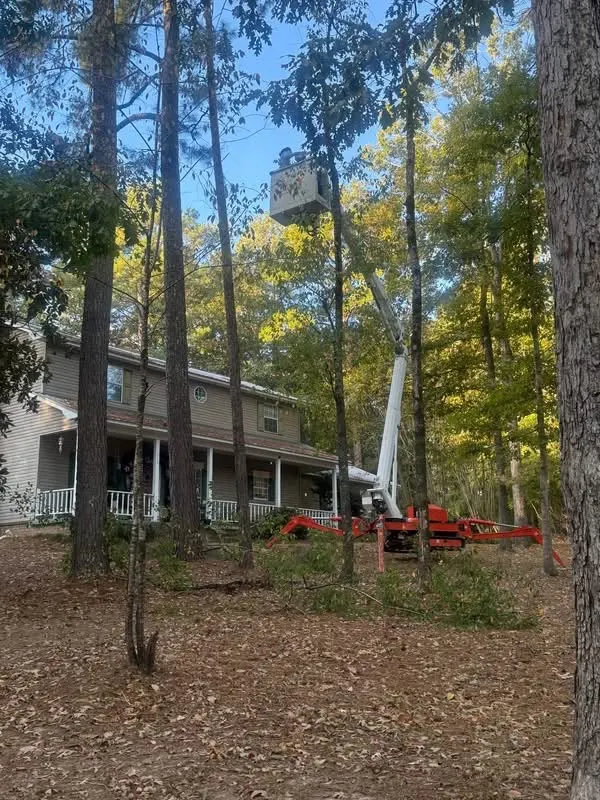
Winter
Dormant pruning; structure is easy to see.
Oak tree care
Short answer: Springfield's oaks live longest when their roots are left alone, they get a deep drink in long dry spells, and they are pruned only in the dormant season. We care for white oaks, post oaks, black oaks and northern red oaks across Greene and Christian County, and the most common damage we see is not a disease but construction, soil grading and drought stress that weaken a tree for years before it shows.
Oaks in the Springfield area fall into two groups, and the group changes how you care for the tree. The white oak group, which includes white oak, post oak, bur oak and chinkapin oak, has leaves with rounded lobes and acorns that mature in one season.
The red oak group, which includes northern red oak, black oak, shingle oak, scarlet oak and pin oak, has pointed, bristle-tipped lobes and acorns that take two seasons.
Post oaks and blackjack oaks often grow on the thinner, rockier soils of the Springfield Plateau, while northern red and white oaks favor deeper soil on lower slopes. Many older neighborhoods around Springfield were built among existing woodland oaks, so a 100-year-old post oak can sit in a front yard that was a farm field or a wooded ridge a few decades ago.
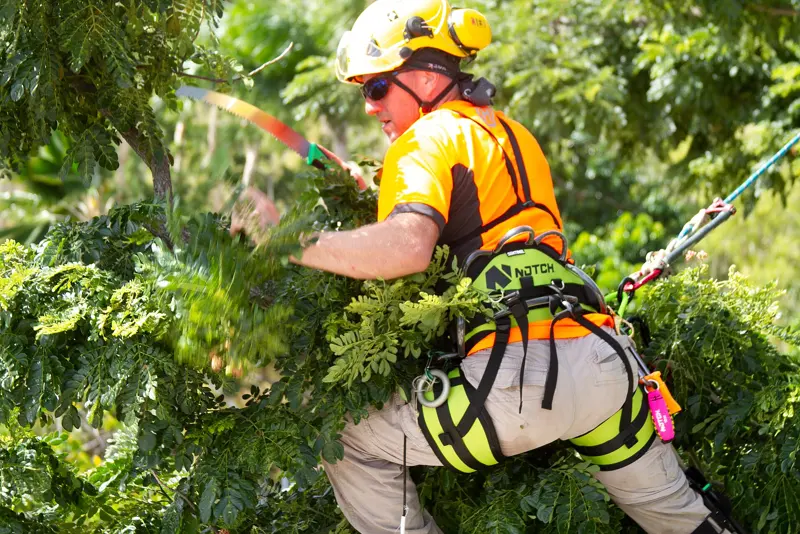
Most of an oak's roots are in the top foot or so of soil, and they spread well past the edge of the canopy. Trenching for utilities, adding a few inches of fill soil, parking trucks or piling building material under a tree can crush or smother those roots.
Oaks often react slowly. Thinning leaves at the top, dead twigs and sprouts along the trunk may show up two to five years after the damage, long after anyone links it to the patio or the addition.
Before any construction, fence off as much of the area under the canopy as you can. If a trench must pass near the tree, ask for boring under the roots instead of open cutting. Never raise or lower the grade around an established oak without a plan from an arborist.
Our tree health assessment visits often start with this question: what changed in the yard in the last few years?
Springfield's summers can swing from flash floods to weeks without rain. Mature oaks handle short dry spells well, but long droughts stress them, and the effects add up. In a long dry stretch, a slow, deep soak under the outer canopy every couple of weeks does more good than frequent light sprinkling at the trunk.
A ring of wood chip mulch two to four inches deep, kept a few inches away from the bark, holds moisture and keeps mowers and string trimmers off the trunk. Turf right up to the trunk competes for water and invites bark wounds. Avoid volcano mulching, the tall cone of mulch piled against the trunk, which traps moisture against the bark.
Ready for a quote? Three quick steps, or call now.
The Missouri Department of Conservation (MDC) describes oak decline as a slow loss of vigor driven by stress such as drought, age and poor sites, with insects and fungi finishing off weakened trees. It is most common in red oak group species, such as black and scarlet oak, on dry, rocky Ozarks ridges.
White oaks had their own problem. MDC reports that white oaks started dying in 2011, and during the record drought of 2012 tens of thousands died within a few months, which led researchers to name the issue rapid white oak mortality. A study with the University of Missouri and the USDA Forest Service found affected trees mostly on lower slopes or along drainages where water runs after heavy rain, most often trees 10 to 18 inches in diameter at chest height.
The cause was never pinned to one factor; researchers pointed to weather, tree stress and secondary pests and pathogens working together.
Oak wilt is a fungal disease that kills red oak group trees quickly. MDC says red oaks can drop their leaves within two to six weeks of infection and die within a year, while white oaks may take years. In Missouri the fungus spreads mainly when sap-feeding beetles carry spores to fresh wounds early in the growing season.
MDC's rule is to avoid pruning or wounding oaks from mid-March through June. MU Extension notes the beetles are most active in Missouri from April through July, which is why we schedule oak tree trimming for the dormant season. If a storm breaks a limb in spring, the cut should be cleaned up and painted with a wound dressing right away; this is one of the few cases where dressing a tree wound is recommended.
Our post on when to prune trees in Missouri covers timing for other species.
Large oaks with two or more main stems joined in a tight V can split under ice or wind, especially where bark is pinched in the joint. Cabling between the stems limits how far they can move apart, and a rod through a weak joint adds support.
These systems need checking every few years. Our tree cabling and bracing page describes how we install them to ANSI A300 practice.
Deadwood in the upper canopy is normal on old oaks, but large dead limbs over a roof, driveway or play area should come out. Removing only what is dead or hazardous, rather than heavy thinning, keeps the tree's energy reserves intact.
A red oak that has wilted from oak wilt will not recover. MDC advises removing diseased trees after they have fully died but before the following spring, when fungal mats can form under the bark, and covering any unseasoned firewood from them with 4-mil clear plastic, edges buried, until the end of the following summer.
An oak with major trunk decay, a large dead section over a target, or a root plate lifting after a storm is also a candidate for removal. You can browse more local tree topics on our Springfield tree guides page.
Missouri Department of Conservation, Oak Wilt and Oak Decline (Missouri Conservationist, October 2023). University of Missouri Extension, Oak Wilt Disease. Missouri Botanical Garden, Oak Wilt.
Why trust us
Springfield, Nixa, Ozark, Republic and the towns between.
What comes down, how it comes down, and what gets hauled away, in writing.
Tree on a line? Call City Utilities first; our guides explain why.
Each guide lists the MDC, MU Extension or city sources behind it.
Seasonal guide
Dormant pruning; structure is easy to see.
Storm season; inspect after high winds.
Heat and drought stress; water young trees deeply.
Plan removals and planting as leaves drop.
Questions
In the dormant season, before mid-March. MDC advises avoiding pruning or wounding oaks from mid-March through June to reduce the risk of oak wilt.
Red oak group leaves have pointed, bristle-tipped lobes. White oak group leaves have rounded lobes with no bristles.
Root damage from digging, soil compaction or added fill often shows up slowly, two to five years later, as thinning leaves and dead branch tips.
In a long dry spell, a slow deep soak under the outer canopy every couple of weeks helps. Avoid frequent light watering at the trunk.
Send photos or call. We give straight answers before any quote.
Book a visit
A few lines about the problem and your address are enough; photos help us plan.