Winter
Dormant pruning; structure is easy to see.
Ash tree alert
Short answer: the emerald ash borer (EAB), an insect that kills ash trees, was confirmed in Greene County by the Missouri Department of Conservation (MDC) in 2018. MDC says EAB kills more than 99 percent of the ash trees it attacks within three to four years. If you have an ash tree in Springfield, decide soon whether to protect it or plan its removal.
EAB is a small, metallic green beetle that is not native to North America. The adults do little harm. The damage is done by the larvae, which feed under the bark and cut S-shaped tunnels through the layer that carries water and nutrients. Over a few years the tree starves from the top down.
EAB attacks only true ash trees (the Fraxinus group). It does not attack mountain ash, which is not a true ash. Green ash and white ash are both common in Springfield yards, along streets and in parks, so the pest matters here.
In August 2018, MDC announced that EAB had been confirmed in 11 more Missouri counties, including Greene County. That brought the total to 53 counties plus the City of St. Louis. EAB was first found in Missouri in 2008.
Local reporting at the time noted the beetles were found in traps along a greenway trail in southwest Springfield and at Crighton Access southeast of the city. The insect spreads on its own over short distances, but it travels much farther when people move infested firewood. That is why moving firewood is discouraged.
Early on, EAB is hard to spot. The first sign is often thinning leaves in the upper crown. As damage grows you may see dead branches at the top, new shoots sprouting low on the trunk, and bark that splits or peels.
Woodpeckers feeding on the larvae strip off outer bark, which leaves pale patches on the trunk. Adult beetles leave small D-shaped exit holes. Under loose bark, the S-shaped tunnels are the clearest sign.
If you are not sure whether a tree is an ash, look for leaves made of several leaflets arranged in pairs, and branches that grow opposite each other. A tree health assessment can confirm the species and check for EAB.
Healthy ash trees can be protected with insecticide treatments, which are repeated on a regular schedule. Treatment works best before much of the crown is lost. A tree that has already lost a large share of its canopy is a poor candidate, and the money is usually better spent on removal and replanting.
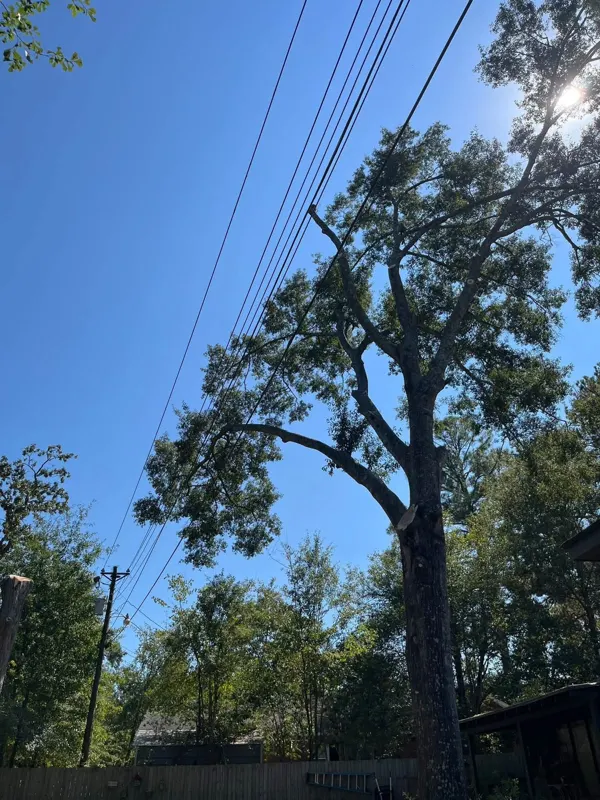
Ask a few questions. Is the tree healthy now? Does it give valuable shade or sit in a key spot? Is it close to the house, a driveway or power lines? Large trees in good condition near a home are often worth treating. Small, weak or poorly placed ash trees are often better removed.
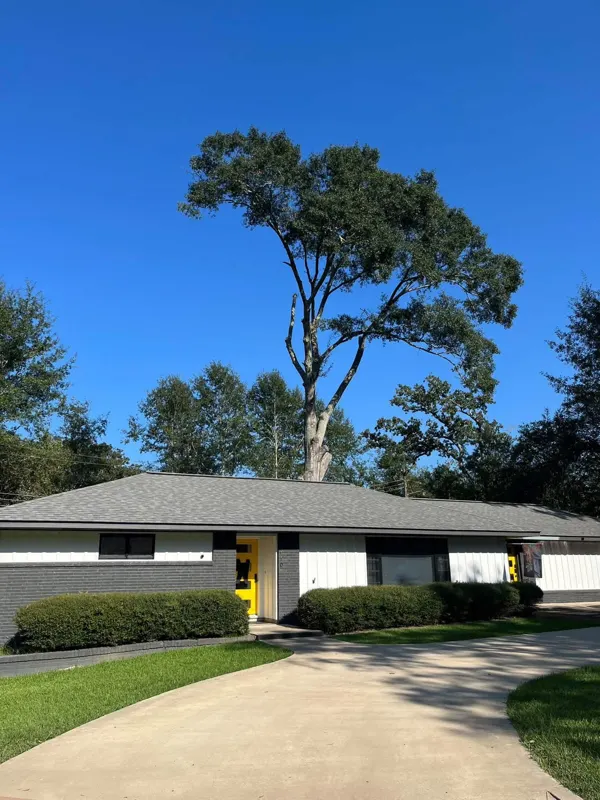
Timing matters for removal too. Ash killed by EAB dries out and becomes brittle quickly, which makes it more dangerous to climb and cut. Removing a declining ash before it dies is usually safer and simpler. Our tree removal service handles ash near homes and lines, and tree planting can replace it with a different species.
The City of Springfield published its own EAB plan for ash trees it manages in the public right-of-way. The city counted 380 city-managed ash trees and estimated that ash makes up less than 3 percent of its urban canopy. Its five-year plan called for treating 177 trees, removing and replacing 164, and treating 39 once and then re-evaluating them.
The city's plan covers public trees only. Ash trees in private yards are the owner's responsibility, even when they stand near the street. If you are not sure who owns a tree near the curb, ask the city before doing work on it.
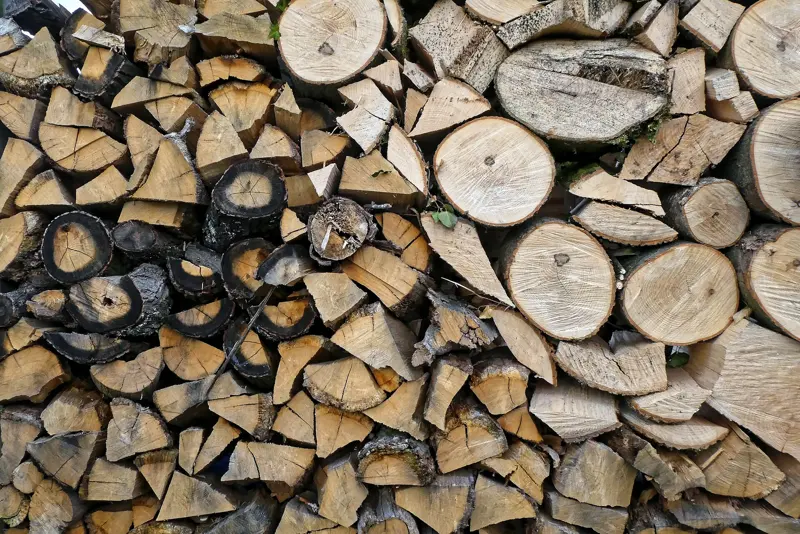
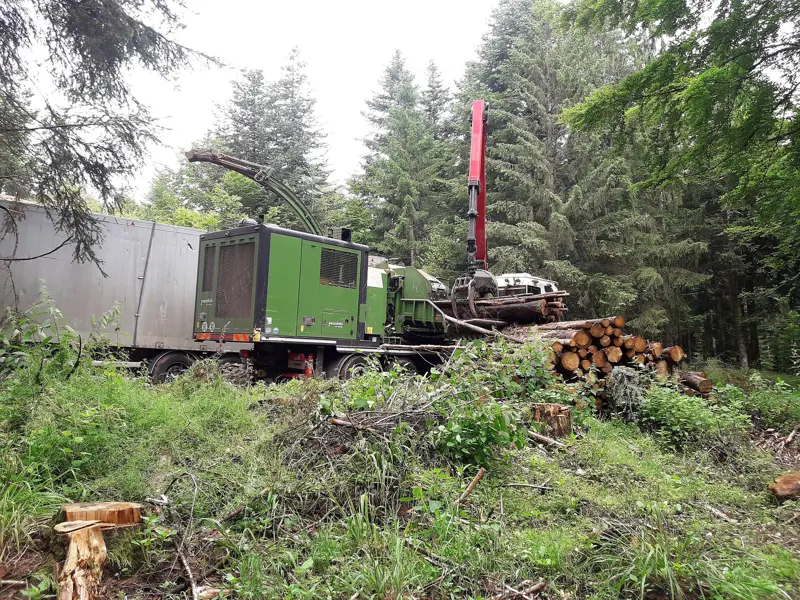
Do not move ash firewood or logs out of the area. Burn firewood where you buy it, and buy it close to where you will use it. When an ash tree is removed, the wood should be handled locally. Ask your tree service how the wood will be chipped, hauled or used. Our debris haul-off team can take care of it after removal.
MDC runs a Forest Pest Hotline at 866-716-9974 for questions and reports about EAB and other forest pests. The City of Springfield has an EAB page with details on public trees.
When an ash comes down, choose a replacement that is not ash. Planting a mix of species protects your yard from the next pest that targets a single kind of tree. Think about the space: how tall and wide the tree will be when grown, how close it will sit to the house, and whether there are power lines overhead.
Native options are often a good fit for the Ozarks, but the right choice depends on your soil, sun and space. Plant in fall or early spring when it is cooler, water it through its first summers, and keep mulch a few inches away from the trunk.
On an EAB visit, the arborist first confirms that the tree is an ash. They look at the crown from the ground, check the trunk and bark for exit holes, woodpecker damage and splits, and note what the tree stands near. Then they give you an estimate of how much canopy has been lost.
With that, you can choose a path. For a healthy tree worth keeping, the plan sets out a treatment schedule. For a tree in decline, the plan covers removal, stump grinding and cleanup. If you have several ash trees, it is common to keep the best one or two and remove the rest over time.
If a declining ash stands on a neighbor's lot but hangs over your house, talk with them early. A dead ash can drop large limbs, and planning the work together is easier than dealing with a fallen tree after a storm. Our emergency storm tree service helps when a tree has already come down.
EAB is one of several pests and diseases that affect trees around Springfield. A yearly walk around your yard to look at each tree's crown, trunk and roots helps you spot problems before they become hazards. Note any tree that leafs out late, drops limbs or shows bark damage, and have it checked.
Dead ash trees get harder and riskier to remove the longer they stand, because the wood turns brittle and limbs can snap without warning. A tree that could be taken down in sections today may need extra equipment later. Getting a quote while the tree is still in decline, rather than dead, usually gives you more choices on timing.
Missouri Department of Conservation: EAB confirmed in Greene County and 10 more counties; City of Springfield: emerald ash borer plan.
Why trust us
Springfield, Nixa, Ozark, Republic and the towns between.
What comes down, how it comes down, and what gets hauled away, in writing.
Tree on a line? Call City Utilities first; our guides explain why.
Our guides are reviewed by a licensed pro with 8+ years in tree work.
Seasonal guide
Dormant pruning; structure is easy to see.
Storm season; inspect after high winds.
Heat and drought stress; water young trees deeply.
Plan removals and planting as leaves drop.
Questions
Yes. MDC confirmed EAB in Greene County in August 2018, and beetles were trapped in southwest Springfield and at Crighton Access.
MDC says EAB kills more than 99 percent of the ash trees it attacks within three to four years.
Healthy, valuable ash trees can be protected with repeated treatment. Trees that have lost much of their canopy are usually better removed and replaced.
Call the MDC Forest Pest Hotline at 866-716-9974.
Talk to a tree crew that works Springfield yards.
Ready when you are
Pick the service, tell us your timing, and add your contact details. A local pro follows up to confirm the details.